

News
Professor Wang Yongxiang of Shanghai Jiao Tong University visited our university for research guidance and academic exchange
From October 10 to 11, Professor Wang Yongxiang, Chair Professor of Finance at the Shanghai Advanced Institute of Finance, Shanghai Jiao Tong University, visited our university for a two-day research guidance and academic exchange program. Hosted by the School of International Economics and Management, the event featured thematic seminars, research discussions, and one-on-one mentoring sessions. It offered faculty and students a valuable opportunity to engage with a leading scholar, fostering academic exchange and research innovation.
Special Lecture: Decoding the Deep-Seated Connection Between Corruption Governance and Social Mobility in the Northern Song Dynasty
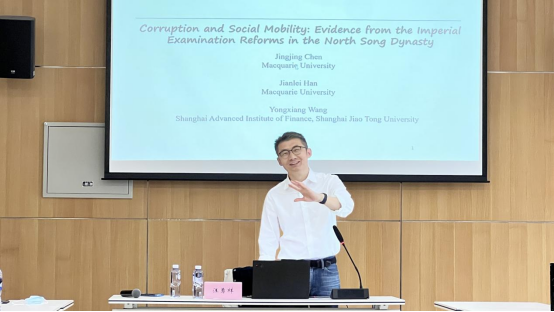
On the morning of Oct.10th, Professor Wang Yongxiang delivered an academic seminar titled "Corruption and Social Mobility: Evidence from the Imperial Examination Reforms in the Northern Song Dynasty." The seminar was chaired by Ma Qingyin, Deputy Party Secretary and Dean of the School of International Economics and Management. The venue was filled to capacity, with faculty and students actively participating with thoughtful academic engagement.
In his presentation, Professor Wang Yongxiang investigates the causal effects of corruption on social mobility by analyzing anti-corruption reforms within the imperial examination system of the Northern Song Dynasty. Selecting pivotal anti-corruption policies from the Northern Song period as the subjects of study, the research designated 20 prefecture-level cities where 28 prominent clans resided as the experimental group, with the remaining examination regions serving as the control group. Employing a difference-in-differences approach, the analysis examined how quotas in prefectural-level cities amplified corruption's impact on commoners' chances of passing the juren examination. Findings reveal significant anti-corruption effectiveness: post-reform, the proportion of commoners passing the jinshi examination increased by approximately 24% in treated regions, while opportunities for ordinary candidates to achieve social mobility rose by 44%. In addition, peasant uprising rates decreased by 3.17%, the number of county schools increased by 20%, and social stability and educational development levels improved markedly. However, the reform's impact exhibited complexity, as constraints related to political connections continued to limit the long-term development of commoner jinshi. Overall, this research provides compelling empirical evidence on the relationship between institutional reforms and social mobility in historical contexts. Its analysis of corruption governance and institutional design also offers valuable historical insights with relevance for contemporary research and policy discussions.
Research Guidance: Precision Support for Young Faculty to Enhance Capabilities
Beyond the seminar, Professor Wang Yongxiang also provided support for the faculty research through group feedback sessions and one-on-one consultations, offering targeted guidance and in-depth advice.
From the afternoon of the 10th to the morning of the 11th, Professor Wang Yongxiang listened to research presentations by young faculty members, including Huang Yuting, Bao Yangming, Zhang Zhengyi, Xiao Yaqing, Zheng Weinan, Wang Zhao, and others at the School of International Economics and Management. During the sessions, faculty members presented their latest research progress on topics including "Bond Defaults and Credit Rating Quality," "Bank Risk Tolerance and SOE Resurgence," "Labor Law Reform and Automation Innovation," "Behavioral Information and Expectation Bias," "Machine Learning-Based Identification of Implied Signals in Order Books," and "Corporate Operational Efficiency and Market Reactions." These studies spanned multiple cutting-edge fields such as digital finance, green finance, labor economics, and behavioral economics. Professor Wang Yongxiang carefully reviewed each presentation and offered detailed feedback. He also shared his own research experience and insights on key issues such as "integrating the Chinese context with international academic standards" and "uncovering the underlying logic behind data."
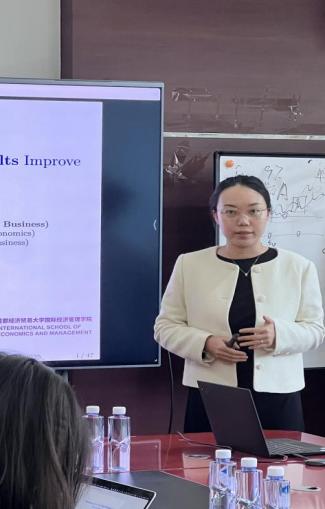
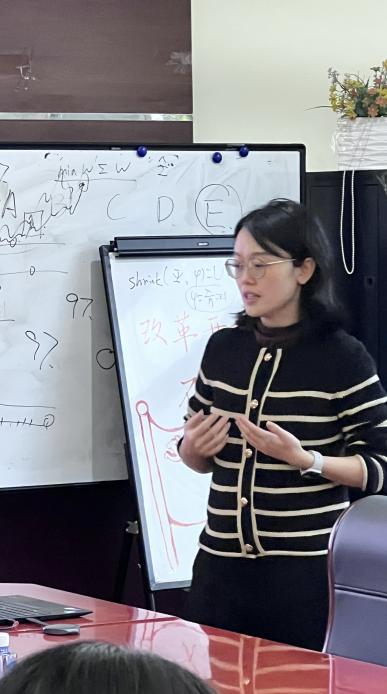
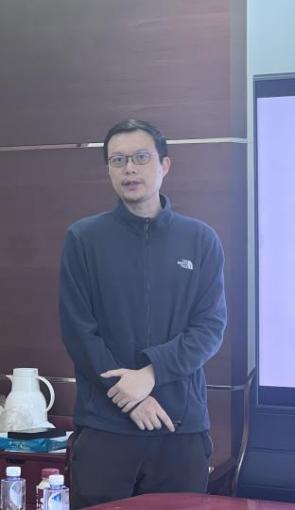
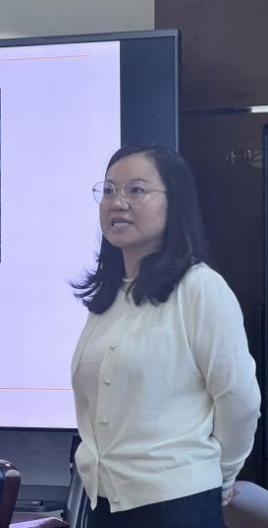
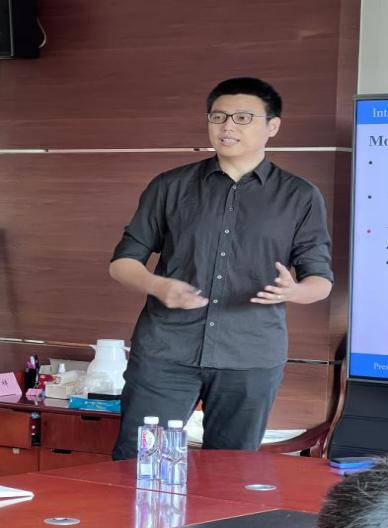
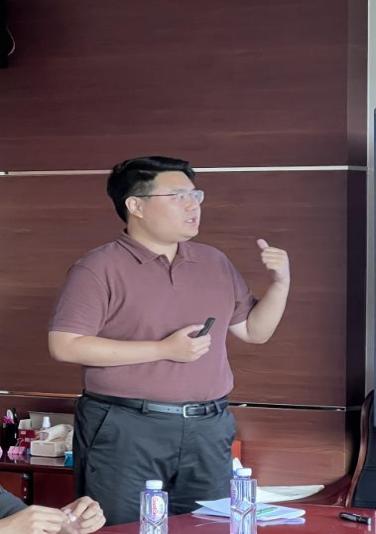
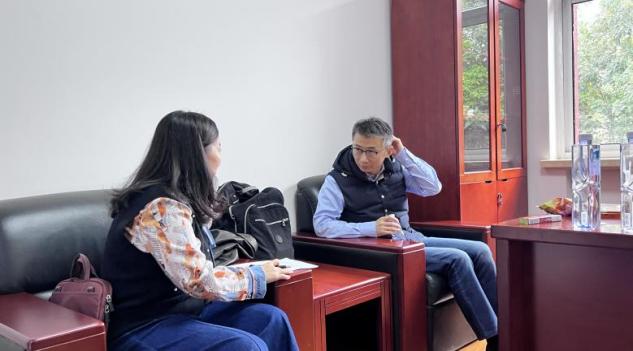
On the afternoon of the 11th, Professor Wang held one-on-one discussions with seven faculty members, offering tailored guidance to challenges related to paper writing, refining research innovations, and paper submission. He encouraged the faculty to anchor their research in China's realities while integrating cutting-edge theories to enhance academic impact. Attendees noted that Professor Wang's guidance was highly targeted and actionable, injecting fresh momentum into their ongoing research endeavors.
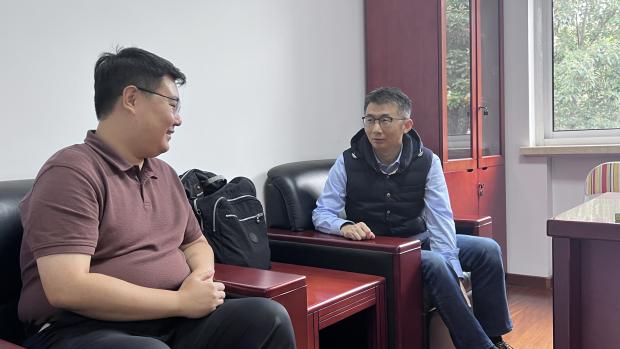
This activity represents a significant initiative to promote openness and collaboration in academic research. It not only exposed faculty and students to cutting-edge research, enhanced research standards and international awareness, but also strengthened our long-term partnership with the Shanghai Advanced Institute of Finance at Shanghai Jiao Tong University.
Moving forward, our school will build on this opportunity to further deepen collaborations with leading domestic and international institutions, promote scientific innovation and interdisciplinary research, and provide strong support for the university's "Double First-Class" initiative and high-level talent development.