

News
The Fourth Bilateral Academic Exchange Symposium between the School of Finance, Renmin University of China, and the International School of Economics and Management, Capital University of Economics and Business, was successfully held.
On November 3, the Fourth Bilateral Academic Exchange Symposium between the School of Finance at Renmin University of China and the International School of Economics and Management at Capital University of Economics and Business was held. Centered on the theme of "Deepening Research Collaboration and Sharing Academic Achievements," the symposium aimed to establish a high-level academic exchange platform, promote in-depth cooperation between the two schools in research, and inject new momentum into disciplinary development. Chengsi Zhang, Vice Dean of the School of Finance at Renmin University of China; Beibei Jiang, Party Secretary of the International School of Economics and Management at Capital University of Economics and Business; Qingyin Ma, Deputy Party Secretary and Dean; Jing Gao, Vice Dean; and Weiming Li, Vice Dean, attended the opening ceremony. The symposium was chaired by Associate Professor Yufan Huang from Capital University of Economics and Business, with over 50 faculty and student representatives from both schools participating.
At the opening ceremony, Qingyin Ma first extended a warm welcome on behalf of the International School of Economics and Management to the experts and scholars from the School of Finance at Renmin University of China. He also expressed sincere gratitude for their long-standing support of the International School of Economics and Management's various endeavors. He emphasized that sustained, in-depth exchanges between high-level research institutions are crucial for the school's high-quality development. He expressed his hope that the two schools would further strengthen their cooperative mechanisms and broaden the scope of their exchanges, jointly propelling scientific research innovation and discipline development to new heights. In his address, Chengsi Zhang stated that the School of Finance at Renmin University of China highly values its partnership with the International School of Economics and Management at Capital University of Economics and Business. He expressed hope that this symposium would serve as an opportunity to establish a long-term and stable academic exchange mechanism. He proposed that both institutions could focus on major national strategic needs and the practical development of the capital city to conduct joint research projects, promote the transformation and implementation of academic achievements, and contribute wisdom and strength to serving the nation's economic and social development.
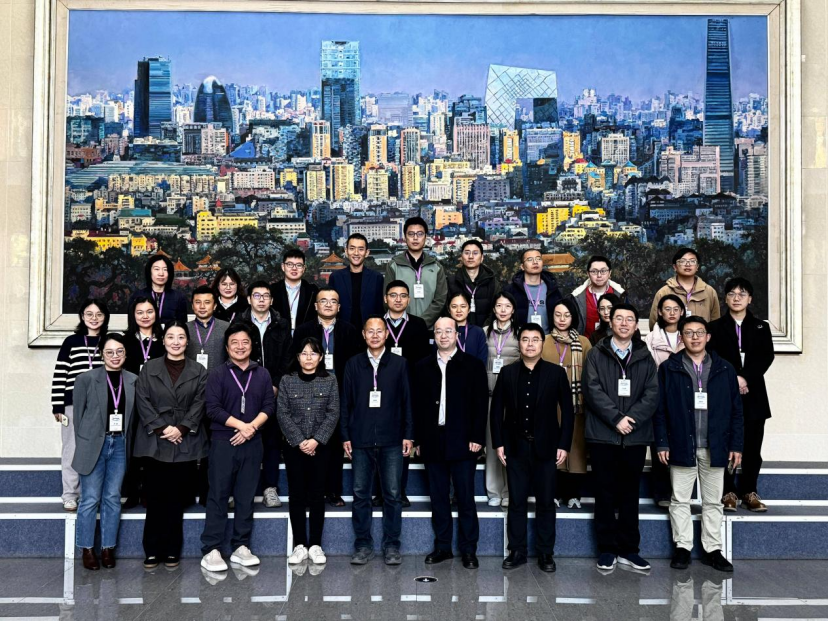
This exchange conference was held in-person, featuring two parallel academic forums and a dedicated session for doctoral students, offering rich content and cutting-edge topics. Over 10 high-quality academic papers were selected for on-site presentations by faculty members from both schools, covering hot research areas such as monetary policy, financial markets, corporate financing, risk management, and international economics. Among them, Associate Professor Yi Niu from the International School of Economics and Management conducted empirical research on the firm selection hypothesis based on China's high-speed rail data. Associate Professor Weinan Zheng employed machine learning methods to analyze hidden information in stock orders. Associate Professors Zhao Li, Xiaohui Guo, and Rui Qiao shared research findings on bank risk-taking behavior, the relationship between U.S. gambling legalization and food security, and micro-behavior in the U.S. Treasury bond market, respectively. Professor Chengsi Zhang from the School of Finance systematically outlined the diversity of China's monetary policy tools and their macroeconomic impacts. Professor Zehao Liu provided an in-depth analysis of the theoretical mechanisms of corporate long-term borrowing. Professor Haoyu Gao and Associate Professor Dong Lu reported research findings on natural transition risks and the heterogeneity of China's bilateral currency swaps, respectively.
To ensure the objectivity and depth of academic exchange, the seminar specifically stipulated that presenters and discussants should come from different schools. Scholars including Yufan Huang, Yaqing Xiao, Yangming Bao, and Xintong Yang from the International School of Economics and Management, as well as Wenting Liao, Zhiheng He, Jun Du, Chenxi Wang, and Fuxin Zhai from the School of Finance at Renmin University of China, served as discussants. They offered professional insights and suggestions for improvement on the presentation content, fostering a lively discussion atmosphere. Additionally, during the doctoral student session, doctoral candidates Tongwei Cui and Yingxue Du from the International School of Economics and Management, along with doctoral candidates Yifan Jiang and Linghao Zhang from the School of Finance, delivered academic presentations and engaged in mutual commentary. This showcased the innovative vitality and research potential of the young academic community.
The conference was well-organized and featured in-depth exchanges. Faculty and students from both institutions engaged in rational discussions on cutting-edge academic topics and shared research insights. This not only fostered the collision and integration of academic ideas but also strengthened friendships. Participants unanimously agreed that the symposium built an efficient bridge for academic communication between the two institutions, laying a solid foundation for future cross-institutional research collaborations and joint talent cultivation.
It is reported that the bilateral academic exchange symposium between the two institutions has successfully convened four sessions, becoming a key event for deepening cooperation and sharing resources. Moving forward, both parties will continue to refine their exchange mechanisms and diversify collaborative formats to jointly advance disciplinary development and elevate research standards.